

When Frederick Douglass reminded Republicans of their unfinished work
The great anti-slavery activist and orator's address to the Republican convention of 1876 resonates today.

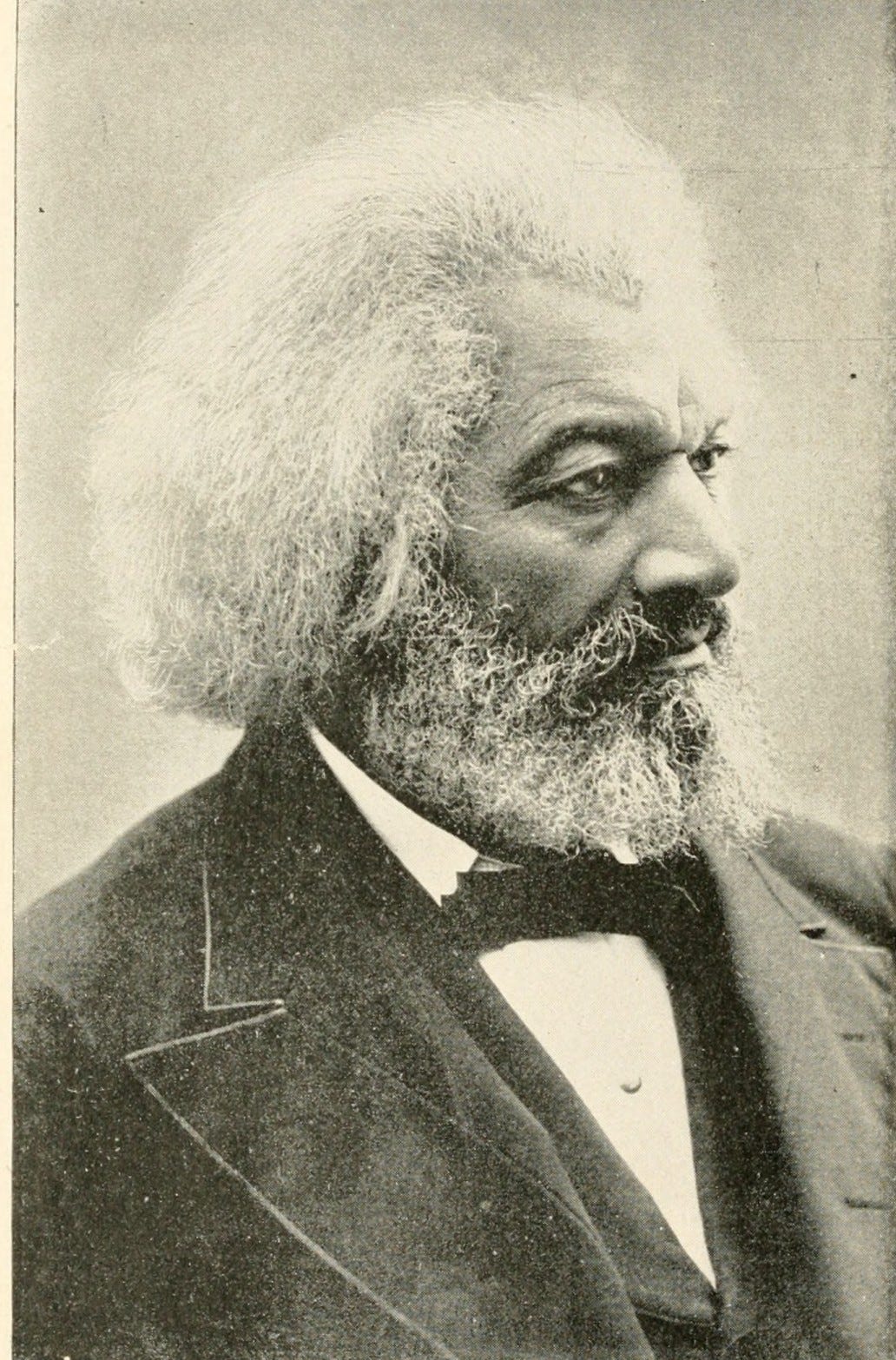
One hundred and fifty years ago, as Americans basked in patriotic commemorations of their independence, a prophetic voice challenged his political allies to keep their promises.
Frederick Douglass, who escaped enslavement to become a famous anti-slavery activist, author, lecturer, and newspaper publisher, addressed the 1876 Republican convention as the party prepared to nominate a candidate to succeed President Ulysses S. Grant. His goal: to call the party back to its commitment to Reconstruction in the states of the former Confederacy and support the use of the federal government to protect the civil and political rights of Black Southerners.
In many ways, Douglass picked an inopportune moment to make his case. The Centennial Exposition in Philadelphia, celebrating 100 years of American self-government, promoted performative patriotic celebration rather than introspection. Republican fortunes were in decline, following massive electoral defeats in congressional and state races in 1874.
Beyond paying lip service to the centennial, there was little interest among the party faithful in anything other than nominating a presidential candidate who could win in the fall.
But Douglass’s speech exemplifies a proud American tradition that President Donald Trump’s campaign to sanitize American history glosses over. From the earliest days of our history, Black Americans have been speaking truth to power, daring this country to confront uncomfortable truths about its past and challenging us to live up to the high ideals of our founding documents.
This tradition is as much a part of the American story as prowess on the battlefield or achievements in the arts, literature, or science. It’s particularly important to remember, it seems to me, during Black History Month and as we mourn the death of the Rev. Jesse Jackson.
Few embodied this prophetic practice quite like Douglass. Born into enslavement in Maryland in 1818, he escaped to the North and traveled to Britain and Ireland to advocate for abolition before returning to the United States. In 1852, speaking to a women’s anti-slavery meeting in Rochester, N.Y., he spoke bluntly about the yawning gap between slavery and the beliefs we profess to revere:
What, to the American slave, is your 4th of July? I answer: a day that reveals to him, more than all other days in the year, the gross injustice and cruelty to which he is the constant victim. ... I will not enlarge further on your national inconsistencies. The existence of slavery in this country brands your republicanism a sham, your humanity a base pretense, and your Christianity a lie. It destroys your moral power abroad; it corrupts your politicians at home. It saps the foundation of religion; it makes your name a hissing, and a bye-word to a mocking earth.1
As the years passed, Douglass gravitated toward partisan politics. “In the 1870s, he promoted and defended the Republican Party with persistent zeal” while regarding Democrats as treasonous, according to biographer David W. Blight.2 In 1876, Douglass got the chance to tell the party what he thought about its failures to follow through on the promises of Reconstruction.
The last two years of President Ulysses S. Grant’s second term saw a hasty retreat from the federal commitment to support Black Southerners as Republicans scrambled to recover from a massive defeat in the elections of 1874. In March 1875, with the blessing of House Speaker James G. Blaine, Republicans joined Democrats to filibuster legislation that would have strengthened federal efforts to protect Black voters at the polls. Later in the year, Grant — with an eye on upcoming elections in Ohio — decided against intervening to stop marauding white terrorists from targeting Black voters in Mississippi.
Conciliation with former Confederates was in the air. Douglass sought to dispel Republicans’ belief that it served the national interest.
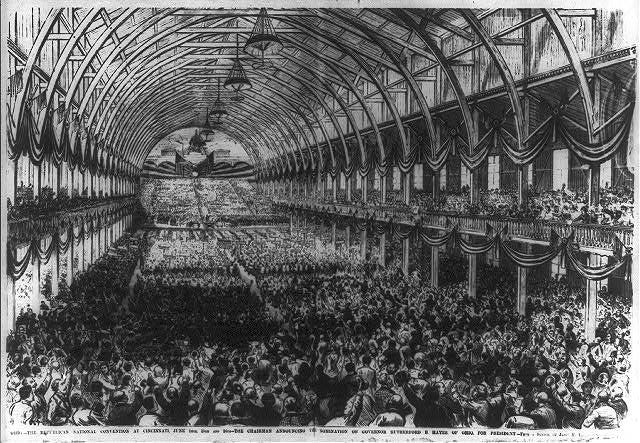
He began diplomatically, describing his “heartfelt gratitude” for the opportunity to speak to the convention. Douglass congratulated the speakers who preceded him on their eloquence and principled advocacy for sound currency and reform of government hiring practices.3
Then he got down to business. Douglass said he came to the convention to uphold what he believed were the “principles involved” in the war to save the Union. “I say that those principles, those interests involved in that tremendous contest, ought to be dearer to the American people, in the great political struggle now upon them, than any other principles we have.”
He continued with a series of provocative questions:
You say you have enfranchised us. You have; and I thank you for it. But what is your emancipation? — what is your enfranchisement? What does it all amount to, if the black man, after having been made free by the letter of your law, is unable to exercise that freedom, and, after having been freed from the slaveholder’s lash, he is to be subject to the slaveholder’s shotgun? Oh! you freed us! You emancipated us! I thank you for it. But under what circumstances did you emancipate us? Under what circumstances have we obtained our freedom? Sir, ours is the most extraordinary case of any people ever emancipated on the globe.”4
Douglass noted that Russian serfs, when they were emancipated by the czar, were granted plots of land. “But when you turned us loose, you gave us no acres: you turned us loose to the sky, to the storm, to the whirlwind, and, worst of all, you turned us loose to the wrath of our infuriated masters.”
Noting that the party seemed preoccupied by questions about monetary policy and civil service reform, Douglass demanded that delegates return to first principles. “Do you mean to make good to us the promises in your constitution? Talk not to me of finance. Talk not of mere reform in your administration. I believe there is honesty in the American people; honesty in the men whom you will elect; wisdom in the men to manage those affairs. But tell me, if your heart be as my heart, that the liberty which you have asserted for the black man in this country shall be maintained?”5
The message did not resonate with delegates. Douglass appears to have recognized this with a hasty conclusion in which he claimed to have lost his voice and recognized that delegates appeared restless. The next morning, the Chicago Tribune called his speech “a fine effort” that nevertheless failed “to convince anybody that the issue of supplemental reconstruction is the paramount issue which dwarfs all other issues.”6
The extent of that failure would soon become clear. Ohio Republican Gov. Rutherford B. Hayes won the party’s presidential nomination and a contested, narrow victory over Democrat Samuel Tilden in the fall. Hayes appointed Douglass marshal for the District of Columbia but adopted a conciliatory posture toward the South that he would come to regret.
In the years that followed, Black Southerners stayed loyal to the Republican Party despite its retreat on Reconstruction. Democrats remained wedded to white supremacy even as they managed to put their association with secession behind them. Jim Crow blossomed as the memory of the Civil War faded. Republicans paid lip service to their historic role in ending slavery and — for a brief time — defending the civil and political rights of Black Southerners, but otherwise stood by as those gains were eroded.
The party listened to Douglass in 1876 but did not heed his message. Such is the fate that befalls many American prophets, but it isn’t necessarily the end of their story. If they were ignored during their lives, their examples remain relevant. We should remember their warnings and revere their courage.
“What to the Slave is the Fourth of July?” Frederick Douglass, 1852, National Constitution Center [https://constitutioncenter.org/the-constitution/historic-document-library/detail/frederick-douglass-what-to-the-slave-is-the-fourth-of-july-1852]
David W. Blight, Frederick Douglass: Prophet of Freedom (New York, Toronto, Sydney, New Delhi: Simon & Schuster Paperbacks, 2018), p. 532.
“Speech of Mr. Douglass,” Proceedings of the Republican National Convention, Held at Cincinnati, Ohio (Concord, N.H.: Republican Press Association, 1876), p. 26. Hereafter cited as Douglass.
Ibid., pp. 26-27.
Ibid., p. 27.
Ibid.; “Fred Douglass: He lets the colored portcullis fall without much subsequent commotion,” Chicago Tribune, June 15, 1876, p. 1.